
Physical Inventory Count: How to Organise It and What to Do with Discrepancies
Cymara ·
A physical inventory count is one of those processes every company with stock has to run, but few have properly solved. Everyone knows it needs to happen. Everyone knows it matters. And yet, in most companies it still gets done with pen and paper, spreadsheets full of corrections, or teams improvising as they go.
The result is almost always the same: a process that runs longer than planned, unreliable stock data, and a reconciliation phase that consumes days of administrative work.
This guide explains what a physical inventory count is, how to organise it properly, which mistakes to avoid and what to do when the numbers don't add up.
What Is a Physical Inventory Count
A physical inventory count is the process of manually counting the actual stock in a warehouse or store and comparing it against the quantities recorded in the system.
Unlike theoretical stock — what the ERP or management software says should be there — physical stock is what actually exists. The gap between the two is known as an inventory discrepancy or stock variance.
A physical inventory count is the only way to find out whether that gap exists, how significant it is in value terms, and which references are generating the most variance.
Without periodic physical counts, purchasing, replenishment and planning decisions are made on data that may be outdated, inflated or simply wrong.
Why Physical Inventory Counts Matter
The stock recorded in a system degrades over time. There are many reasons why the theoretical figure and the real figure end up diverging:
- Data entry errors. Receipts incorrectly logged, delivery notes not processed, or returns not updated.
- Shrinkage and damage. Products written off in the warehouse but not removed from the system.
- Theft or loss. Difficult to detect without a physical count.
- Picking errors. When one reference is shipped instead of another and the system is not corrected.
- Misplaced products. Stock that exists but cannot be located when needed.
The longer a company goes without a physical count, the more variance accumulates. And that variance has direct consequences: unnecessary purchases, stockouts on references the system shows as available, or capital tied up in products the system considers sold but that are still sitting in the warehouse.
How Often to Run a Physical Inventory Count
There is no single answer. It depends on the number of references, stock turnover, industry and the level of accuracy the company needs to make good decisions.
The three most common approaches are:
Annual general count
Done once a year, usually during a low-activity period such as August, Christmas or the end of the financial year. The entire warehouse is counted over one or several days, with operations paused or reduced. It is the most complete approach, but also the most costly in time and coordination.
Cycle counting
Instead of counting everything at once, the warehouse is divided into zones or categories and one section is counted each week or month. The goal is to review the full catalogue several times a year without stopping operations. It is more sustainable operationally, but requires more discipline and planning.
Sample counting
Specific references are selected — usually the highest-value, fastest-moving or highest-risk items — and counted more frequently. Useful as a complement to the annual general count, especially in large operations.
Many companies combine an annual general count with cycle counts throughout the year to keep stock data accurate without the cost of stopping the warehouse four times a year.
How to Run a Physical Inventory Count Step by Step
A physical inventory count does not start on counting day. It starts days before, with preparation that largely determines what happens during the count itself.
1. Preparation
Before counting starts:
- Define the scope. Which warehouses, zones and references will be counted. In large operations, divide by zones assigned to different teams.
- Freeze stock movements. Close or suspend stock transactions during the count period to prevent receipts or shipments from happening while counting is underway.
- Prepare counting tools. If using paper, print lists with codes and descriptions. If using a digital tool, load references and configure devices.
- Assign teams and responsibilities. Who counts which zone, who supervises and who handles issues.
- Brief the team. A physical count requires focus. The team needs to know exactly what is expected, how to record what they find and what to do when in doubt.
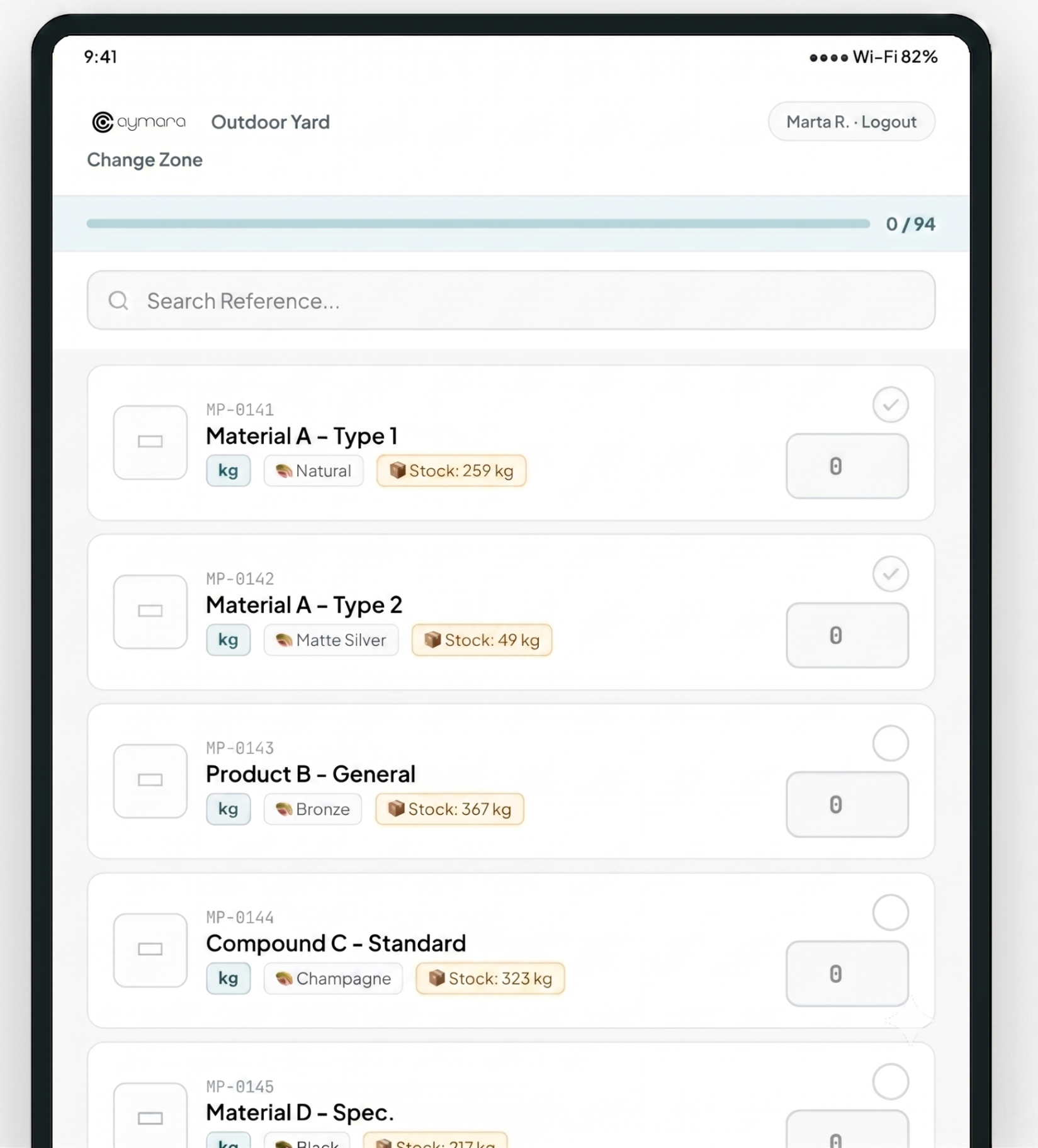
2. The Physical Count
On counting day, a few basic rules apply:
- Count blind. The ideal is for each zone to be counted by a team with no access to the theoretical figure, to prevent the system number from influencing the count. This reduces confirmation bias significantly.
- Record everything found. Including unexpected references, damaged products or unidentified items.
- Double-count high-value references. If a reference carries significant financial weight, having two people count it independently and compare results is worth the extra time.
- Document incidents. Any anomaly, uncertainty or discrepancy should be noted for review during the close.
3. Close and Reconciliation
Once the physical count is complete, the real figure needs to be crossed against the system figure.
Discrepancies that appear can be classified into three types:
- Positive discrepancies. More stock than the system shows. May indicate unregistered receipts, unprocessed returns or incorrect outbound transactions.
- Negative discrepancies. Less stock than the system shows. May indicate shrinkage, theft, picking errors or unrecorded outbound movements.
- Missing references. Stock the system shows as existing but which cannot be found physically. Needs investigation to determine whether it is in another location or simply does not exist.
Reconciliation means updating the system with the real figure, justifying or investigating the most significant discrepancies.
4. Discrepancy Analysis
A physical inventory count does not end when the system is updated. The most important step is understanding why discrepancies appeared and what can be done to reduce them in the next count.
Useful questions at this stage:
- Are discrepancies concentrated in a specific product type, zone or supplier?
- Are the references with the biggest variance the fastest-moving or most-handled ones?
- Is the root cause in data entry, warehouse process or the system itself?
A solid discrepancy analysis turns the physical count into a continuous improvement tool, not just a data update exercise.
Most Common Mistakes in a Physical Inventory Count
After going through this process in many companies, certain mistakes come up repeatedly:
- Counting with open stock movements. If receipts are still coming in or orders still going out during the count, the count figure and the system figure are not comparable. Stock must be frozen.
- Poorly identified references. If references are not clearly labelled in the warehouse, the counting team loses time searching or makes errors assigning quantities to the wrong codes.
- Recording on paper and transcribing later. This is the most common source of error. Every transfer from paper to system introduces the possibility of a reading error, a calculation mistake or a typo.
- No clear zone assignments. Without a clear assignment of who counts what, some zones get counted twice and others not at all.
- Letting counters see the theoretical figure. If the counter knows what the system says, they will tend to confirm that number rather than count independently. Blind counting is always more reliable.
- Not doing anything with the discrepancy analysis. A count without follow-up analysis is just a data update. The real value comes from understanding why discrepancies exist and how to reduce them.
The Real Cost of a Physical Inventory Count
The cost of a physical count is rarely calculated accurately. The counting day is what comes to mind, but the real cost includes much more:
- The hours of the counting team over two or three days.
- The hours of administrative staff transcribing, reconciling and uploading data to the system.
- The cost of errors that go undetected.
- The operational cost of having the warehouse paused or running at reduced capacity.
For a company with four people counting over three days and one person dedicated to reconciliation, the labour cost alone can easily exceed 1,500 to 2,000 euros per count. That excludes transcription errors, which can directly affect purchasing decisions, safety stock levels and planning for the next season.
Physical Inventory Count and Stock Data Quality
The physical count is the starting point for almost everything else.
A demand forecasting system can only work well if the stock data feeding the model reflects reality. An MRP calculating purchasing requirements from outdated inventory will generate incorrect proposals. Safety stock calculated on inaccurate data can cause both stockouts and overstock at the same time.
The chain is simple: reliable stock data → better purchasing decisions → less capital tied up → better service levels.
The physical count is the moment that chain resets. If the process is poorly organised, the reset achieves nothing.
What Separates a Well-Run Count from One That Just Gets Done
The difference is not in the result of counting day. It is in what happens before and after.
- Before: rigorous preparation, clearly identified references, assigned zones, appropriate tools and a team that knows exactly what to do.
- During: counting blind from the theoretical figure, clean recording without manual transcription and real-time documentation of incidents.
- After: fast reconciliation, analysis of the most significant discrepancies and concrete actions to reduce them in the next count.
Companies that run their inventory counts well do not just end up with more reliable stock data. They also reduce the time they spend on this process each year, because they fix the structural errors that generate recurring variances.
How Cymara Helps Improve the Physical Inventory Count Process
A physical count is not just an organisational problem. It is a data problem. And unreliable stock data affects every planning, purchasing and replenishment decision that follows.
Cymara works with companies that want to improve the quality of their stock data, reduce the time and cost of the physical inventory process and connect count results to discrepancy analysis and purchasing planning.
To find out how to improve your next physical count or how to connect count data to your management system, discover Cymara Stocktake or contact Cymara and we will analyse your situation together.
Key Points on Physical Inventory Counts
- A physical inventory count is the process of manually counting real warehouse stock and comparing it against the system figure.
- Its main value is in detecting variances, updating stock data and improving the reliability of planning, purchasing and replenishment decisions.
- A well-run physical count requires prior preparation, blind counting without access to the theoretical figure, clean recording without manual transcription and post-count analysis of discrepancies found.
- The real cost of a physical count goes beyond counting day. It includes reconciliation time, transcription errors and the impact on purchasing decisions if the resulting data remains unreliable.
Frequently Asked Questions about Physical Inventory Counts
How often should a physical inventory count be done?
It depends on the industry, number of references and stock turnover. The most common approach is one annual general count combined with cycle counts by zone or category throughout the year.
Does the warehouse need to stop for a physical count?
Not always. For general counts, freezing stock movements during the count is usually recommended. For cycle counts, it can be done by zone without stopping the entire operation.
What do you do with discrepancies that appear?
Cross them against the system figure, classify them, investigate the most significant ones and update stock. The next step is analysing root causes to reduce those discrepancies in the next count.
Why should the counter not know the theoretical stock figure?
Because if they know the system number, they will tend to confirm it rather than count independently. Blind counting is always more reliable and detects more errors.
What is the relationship between physical inventory and MRP or demand forecasting?
The physical count is the starting point for the stock data that feeds any planning system. An MRP or demand forecast built on outdated stock generates incorrect purchasing and replenishment proposals.
How much does a physical inventory count actually cost?
More than it appears. The real cost includes hours of the counting team, post-count reconciliation time, transcription errors and the impact on purchasing decisions if the resulting data is still unreliable.