Physical inventory outsourcing: 7 benefits, costs and when it pays off
Cymara ·
How much does a physical inventory count really cost? Staff counting hours are only part of the equation. Preparation, disruption, data consolidation and variance checks also consume resources.
That is why many businesses consider outsourcing physical inventory. Whether it pays off depends on the size and complexity of the operation, how frequently stock is counted, and the quality of the process.
This practical guide explores seven benefits, potential drawbacks, costs and the questions to ask before choosing an inventory counting service.
What is physical inventory outsourcing?
It means hiring a specialist provider to count stock on hand at a specific point in time. The scope may include planning, SKU identification, zone-based counts, verification, consolidation and variance analysis.
Outsourced stocktaking is different from outsourcing ongoing inventory management. A stocktake verifies quantities; ongoing management may also include purchasing, replenishment and operational control.
7 benefits of outsourcing inventory counting
1. Free up your employees' time
In a hotel or store, counting inventory takes employees away from service, replenishment or everyday operations. A specialist team can take on much of that work, although the business still needs to coordinate access, SKU details and exceptions.
2. Standardize the counting process
Clear zones, consistent units of measure and defined checking procedures help prevent missed locations and duplicate counts. Outsourcing is not an automatic guarantee of accuracy: ask for evidence of quality controls.
3. Minimize operational disruption
Counting by location during quieter shifts can reduce disruption. In a live operation, stock movements during the count must be recorded so that the final numbers describe a consistent point in time.
4. Avoid manual data entry
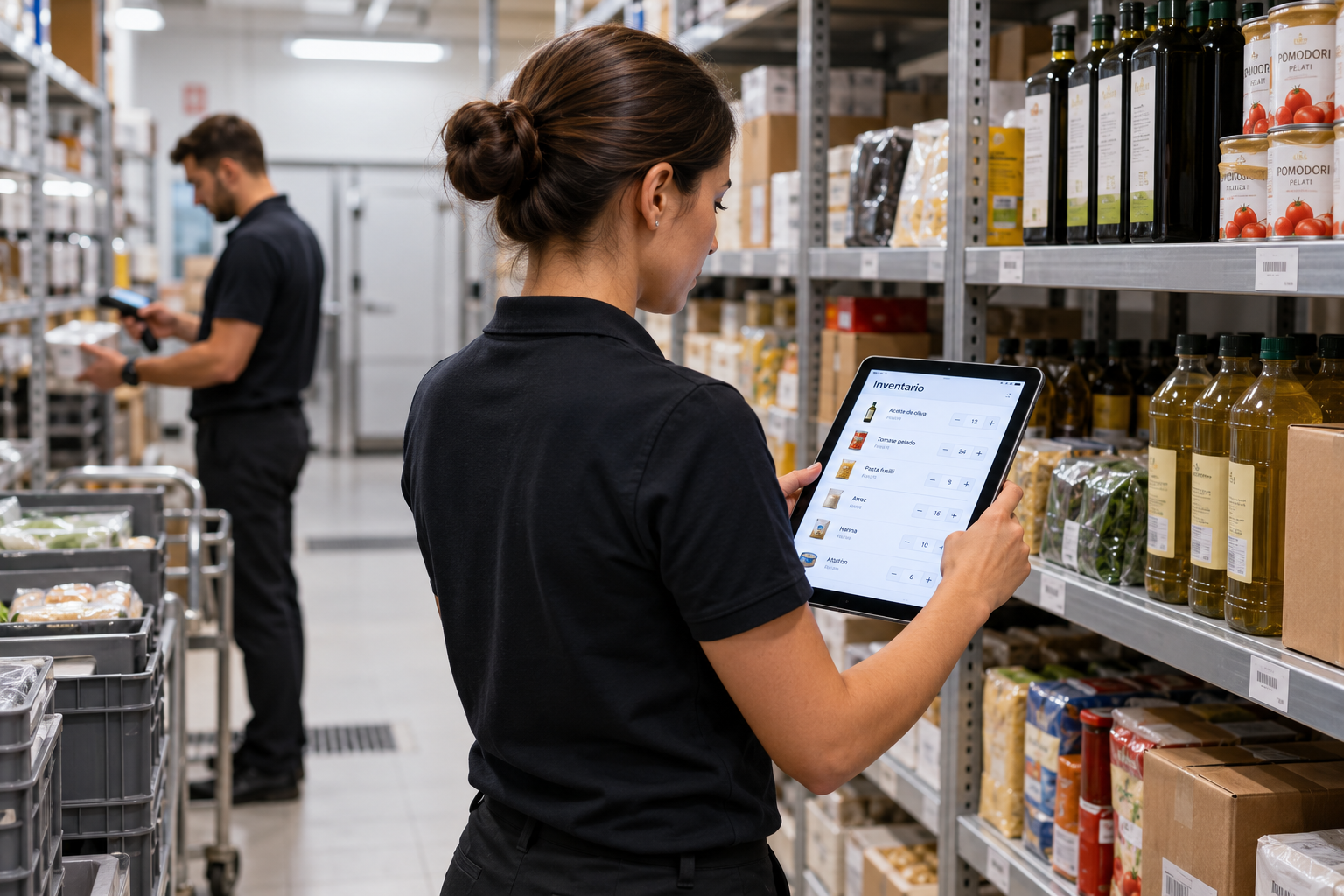
With digital tools, counters can enter quantities directly on a mobile device or tablet rather than transferring handwritten sheets into spreadsheets. Businesses can also digitize counting without outsourcing it.

5. Gain a more independent count
A separate counting team is less involved in day-to-day inventory routines. This can support internal checks and year-end reviews, though it does not replace a financial audit.
6. Turn quantities into useful variance insights
Physical quantities become more valuable when compared with book stock. A discrepancy of 42 bottles could reflect unrecorded consumption, transfers, receiving mistakes or unit errors. The count shows what needs investigation; it does not prove the cause.
7. Scale resources to the job
An annual full stocktake may not justify a permanent counting team. External specialists can provide capacity for seasonal counts, multi-location projects and exceptional reviews.
In-house vs. outsourced inventory: comparison
| Factor | In-house count | Outsourced count |
|---|---|---|
| SKU knowledge | Usually strong | Needs onboarding |
| Availability | Depends on daily workload | Scheduled for the project |
| Process | Set by your team | Agreed with the provider |
| Technology | Your own tools | Service-dependent |
| Independence | Less separate from operations | Greater separation |
| Cost | Internal hours and overhead | Fees plus client coordination |
The right choice is the one that produces dependable results with an acceptable total cost and minimum disruption.
How much does an outsourced physical inventory cost?
Pricing depends on SKU counts, locations, accessibility, stock volumes, operating hours, travel and deliverables.
When comparing quotes with an internal stocktake, include preparation and follow-up activities. An illustrative example:
- Four staff for eight hours at €20 per labour hour: €640.
- Another 16 combined hours to prepare, consolidate and verify at the same rate: €320.
- Estimated internal labour total: €960, excluding potential disruption.
This is not an industry benchmark or a supplier quote. The true comparison needs the provider's defined deliverables and the amount of client time still required.
Why hotel inventory is a strong use case
Hotels hold products across food stores, kitchens, restaurants, bars and housekeeping areas. These locations remain operational during the stocktake.
Counting zones, units of measure and stock movements must be controlled carefully. See our detailed hotel physical inventory guide for a practical counting process.
If you prefer to keep counting in-house, digital stocktake software can still help remove paper-based data entry.
When is outsourcing NOT worthwhile?
Small operations with few products, short counting windows and trained, available employees may be better served by an internal count. The same can be true for highly efficient daily cycle-counting programs.
A hybrid approach is often sensible: frequent counts in-house and external support for full stocktakes or independent reviews.
Checklist: questions to ask an inventory counting company
- How do you define zones and prevent duplicate counts?
- How are stock movements handled during the stocktake?
- How do you identify SKUs and units of measure?
- Is counting digital, and can we inspect the audit trail?
- What happens when quantities do not match?
- Does the scope include reconciliation and variance analysis?
- What data files and reports will we receive?
- What travel, hours and tasks are excluded from the quote?
Do not judge a provider by hourly rates alone. Agree on the final deliverable first.
Frequently asked questions
Is outsourcing inventory cheaper?
Not always. Compare external fees with internal labour, preparation, reconciliation, checking and operational disruption.
Do we need to replace our ERP?
Usually not. Counts can be taken in a separate tool and exported for validation and import, where supported by the existing ERP.
Can we outsource only part of our inventory?
Yes. A stocktake provider may count selected areas, product categories or locations.
How often should a physical inventory be carried out?
It depends on stock value, turnover and variance risk. Many organizations combine full stocktakes with regular cycle counts of critical items.
Conclusion
Outsourcing inventory is not simply paying someone else to count. When well planned, it can free capacity, standardize work and turn stocktake results into useful information. But it is not the right answer for every operation.
Make the decision using a fair comparison of cost, accuracy and operational impact.
Considering external support for your next stocktake? Explore Cymara's physical inventory solutions.